 Skip to content








Short answer: creatine does not contain caffeine.
They are entirely different compounds with distinct mechanisms, separate sourcing, and no chemical relationship. If you're seeing both on a supplement label, that's a formulation choice made by the manufacturer. It is not a defining feature of creatine itself.
The confusion is understandable. Both creatine and caffeine are among the most studied performance supplements available, and they frequently appear side by side in sports nutrition products. But conflating them creates real problems: it muddies decisions about timing, leads people to avoid creatine unnecessarily if they're caffeine-sensitive, and obscures what each compound actually does. Let's separate them properly.
What Is Creatine?
Creatine is a naturally occurring compound synthesized in the body from three amino acids: arginine, glycine, and methionine. The majority is stored in skeletal muscle as phosphocreatine, where it plays a central role in the phosphocreatine energy system. Specifically, the rapid regeneration of ATP during short-duration, high-intensity effort.
Your body produces creatine endogenously, and dietary intake adds to that pool. The primary food sources are:
-
Red meat (beef, pork, lamb): roughly 2g of creatine per pound of raw meat
-
Fish (herring, salmon, tuna): among the highest dietary sources
-
Poultry: moderate amounts, lower than red meat and fish
-
Dairy: trace amounts
People who eat little or no animal protein tend to have lower baseline creatine stores, which is one reason supplementation shows particularly robust effects in vegetarians and vegans.
Supplemental creatine is synthesized from the same precursor amino acids. Creatine monohydrate is the most researched form, with thousands of trials over decades have established both its safety and efficacy. No stimulant properties, no central nervous system activity, no effect on alertness or heart rate. The performance benefit is purely metabolic.
What Is Caffeine?
Caffeine is a methylxanthine alkaloid and a central nervous system stimulant that works by blocking adenosine receptors in the brain. Adenosine accumulates as a byproduct of neural activity and promotes drowsiness; caffeine competitively inhibits these receptors, sustaining alertness and reducing the perception of effort and fatigue.
Caffeine also has ergogenic effects that go beyond alertness. Its documented performance benefits include:
-
Reduced perceived exertion during endurance exercise
-
Increased fatty acid mobilization, sparing glycogen at submaximal intensities
-
Direct effects on muscle contractility at sufficient doses
-
Improved reaction time and cognitive performance under fatigue
These are distinct from creatine's mechanisms and operate through entirely separate pathways. One is a metabolic substrate for energy production; the other is a neuroactive compound that changes how effort is perceived.
How Caffeine and Creatine are Different
The creatine-caffeine confusion originates from a few compounding factors:
Pre-workout supplements frequently combine both. Many commercial pre-workout formulas contain creatine alongside stimulants including caffeine, beta-alanine, and others. Seeing both on a label repeatedly creates an association that doesn't reflect anything about creatine's chemistry.
Both are classified as performance supplements. In the broader conversation about exercise nutrition, creatine and caffeine are routinely discussed in the same context. That proximity in marketing materials, fitness content, and supplement stacks blurs the distinction for people who haven't researched the mechanisms independently.
The word "energy" is applied to both imprecisely. Marketing copy describes both compounds as energy-supporting, even though creatine's contribution to energy production is biochemically different from caffeine's stimulant effect. Creatine supports ATP availability; caffeine makes the effort feel easier. These are not the same thing.
Can You Take Creatine and Caffeine Together?
Yes, and many athletes do. There's no established safety concern with combining them. Some earlier research suggested caffeine might attenuate certain performance effects of creatine, but more recent evidence has complicated that picture considerably. The practical magnitude of any interaction, if it exists at all, appears to be small.
The more clinically relevant consideration is timing. Caffeine taken in the afternoon or evening disrupts sleep architecture, reducing slow-wave and REM sleep, which is when the majority of physical recovery and hormonal adaptation occurs. Creatine has no known sleep disruption effects and can be taken at any point during the day.
For people who want precise control over their supplement regimen, keeping creatine separate from caffeine-containing products has a practical advantage: you're not constrained by the caffeine in a pre-workout when deciding when to take creatine. This matters particularly for:
-
People who train in the evening and want to avoid late-day caffeine
-
Those who are caffeine-sensitive or cycling off stimulants
-
Anyone managing blood pressure or heart rate concerns
-
People who want consistent daily creatine dosing independent of workout timing
Reading Supplement Labels Carefully
When evaluating any supplement, the label tells you exactly what's in it, if you know what to look for. Creatine listed as an ingredient doesn't imply caffeine. If a product contains caffeine, it will be listed separately, and in most markets, the milligram amount will be disclosed.
Products that combine creatine and caffeine are almost always marketed as pre-workouts, and the stimulant content is typically a feature, not an omission. What's worth scrutinizing more carefully is whether the doses of each compound are clinically meaningful. Common label red flags include:
-
"Proprietary blends" that obscure individual ingredient doses
-
Creatine listed in milligrams rather than grams (effective doses are measured in grams)
-
Caffeine listed without a milligram disclosure
-
Long ingredient lists that spread an ineffective dose across many compounds
Effective creatine supplementation requires consistent daily intake at meaningful doses. That outcome depends more on formulation quality and delivery than on whatever else happens to share the label.
Why Delivery Format Matters for Creatine
Creatine monohydrate is well-established, but conventional creatine powders present a practical absorption challenge. Dissolution is often incomplete, particularly at higher doses, and absorption can be variable depending on gastric conditions.
Liposomal delivery addresses this by encapsulating creatine in phospholipid vesicles that protect the compound through digestion and support absorption at the cellular level.
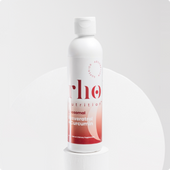
Rho's Liposomal Creatine Monohydrate uses this format: liquid, pre-dissolved, no scooping, no mixing, no uncertainty about whether a powder fully went into solution.
For people over 40, whose digestive efficiency and gastric acid production may be declining, the delivery system is a legitimate variable. Phospholipid encapsulation works with your digestive system rather than depending on optimal conditions that may not consistently be present.
The practical upside extends beyond absorption: a liquid liposomal format can be taken at any time without the need to mix a shake, stack into an existing liquid, or worry about carrying powder. Consistency is easier to maintain when the format is frictionless.
What the Research Shows on Creatine Benefits
To underscore why getting the right creatine product matters: the research literature on creatine is unusually robust. Established and well-replicated findings include:
-
Increased phosphocreatine stores in muscle, supporting repeated high-intensity efforts
-
Meaningful gains in strength and power output across multiple training modalities
-
Improved performance in short-duration, maximal-effort activities
-
Emerging evidence for cognitive benefits, particularly working memory and processing speed under fatigue
-
Potential neuroprotective effects that are of increasing research interest in aging populations
Takeaway
Creatine and caffeine are not the same compound, do not contain each other, and serve different physiological purposes. Creatine supports ATP resynthesis and is a metabolic substrate; caffeine is a central nervous system stimulant that modulates alertness and perceived effort. Both have well-documented places in a performance-oriented supplement regimen, but they work better when you understand each on its own terms.
If you've been avoiding creatine because you assumed it was stimulant-containing, that assumption isn't supported by the evidence. And if you've been relying on a caffeine-heavy pre-workout to get your creatine dose, a standalone product gives you more flexibility to take it consistently, on your own schedule, without the caffeine dependency that comes with bundled formulations.
The goal is a regimen that's precise, evidence-based, and practical enough to sustain long-term. Understanding what each compound does, and what it doesn't do, is the first step.
These statements have not been evaluated by the Food and Drug Administration. This product is not intended to diagnose, treat, cure, or prevent any disease. This information is for educational purposes only and is not intended as medical advice. Consult with a qualified healthcare provider before starting any new supplement regimen.
Leave a comment